Turkey to Showcase the Social Face of Climate at COP31: A Focus on Just Transition and Women
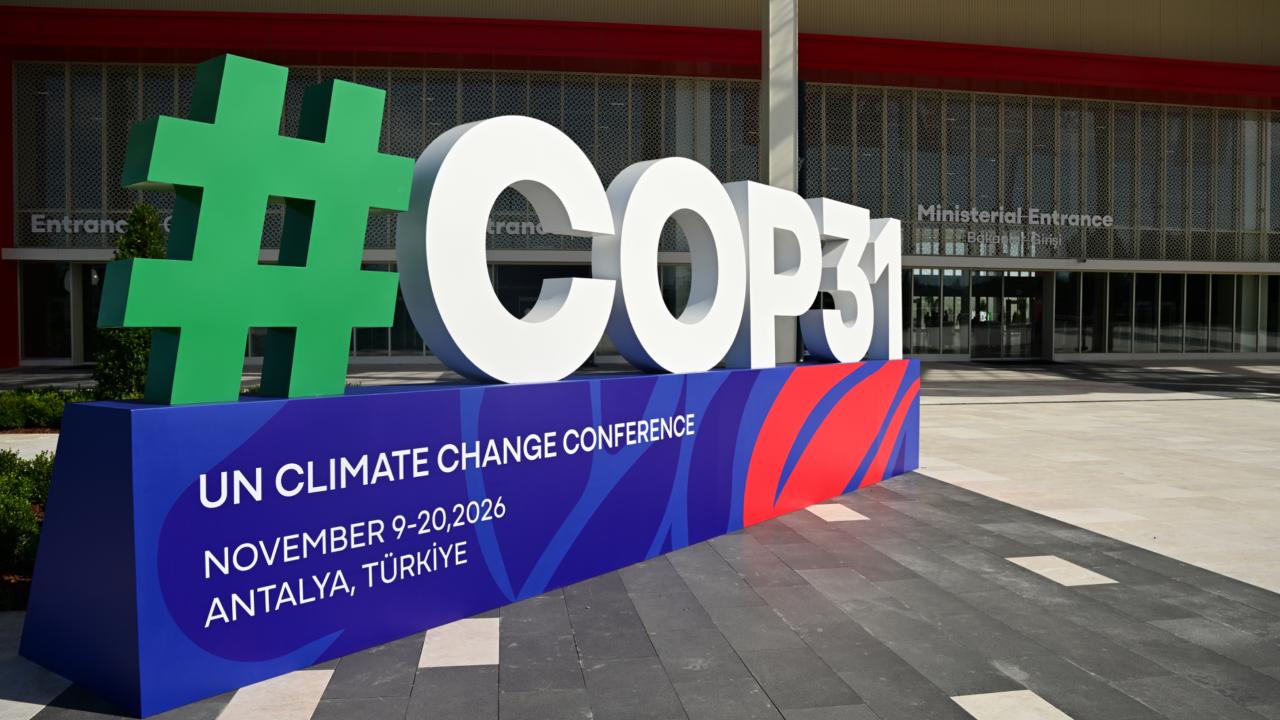
Turkey is preparing to host the 31st Conference of the Parties (COP31) to the United Nations Framework Convention on Climate Change (UNFCCC) in Antalya from November 9-20. Under the leadership of the Ministry of Family and Social Services, Turkey has prepared a comprehensive program to highlight that climate change is not merely an environmental issue but a phenomenon with profound social impacts. The efforts led by Minister Göktaş aim to bring critical topics to the global stage, such as the integration of women into the green economy, social protection mechanisms during just transition processes, and the participation of youth in climate policies.
The high-level events scheduled for November 13-14, featuring ministers from various countries, will serve as a platform to establish social justice in the fight against climate change. Turkey positions this summit not only as an environmental meeting but also as a model demonstrating how social welfare can be harmonized with climate policies.
Background of the Development
In recent years, climate change has climbed to the top of the international agenda, not just through carbon emissions and temperature rises, but also through its social dimensions such as migration, poverty, and gender inequality. In this context, Turkey continues its vision of being one of the few countries to integrate environmental policies with social policies. Past initiatives, such as the 'Zero Waste' movement and the strengthening of women's cooperatives, form the cornerstone of Turkey's institutional experience in this field.
COP31 represents a strategic turning point for Turkey to showcase this experience on the international stage. By establishing climate change as one of its core policy axes, the Ministry argues that environmental sustainability is only possible through social resilience. This approach is fully aligned with the UN's Sustainable Development Goals.
While climate summits have historically been dominated by technical and financial discussions, the Antalya summit is expected to bring 'human-centric' climate diplomacy to the forefront. Turkey aims to act not only as a host but also as a solution partner that bridges social protection and the green economy.
Expert and Industry Insights
Industry representatives and climate economy experts view Turkey's strategic move very positively. According to experts, the transition to a green economy can negatively affect vulnerable groups in the labor market if not managed correctly. Therefore, the Ministry's emphasis on a 'Just Transition' is of critical importance to minimize the social costs of economic transformation.
- The impacts of climate change on the labor market present both new opportunities and risks, particularly for female employment.
- Integrating social protection systems into the green transition increases societal resilience.
- The transition of women's cooperatives to sustainable production models strengthens local economies.
- Youth participation in climate policies is vital for long-term sustainability goals.
- Zero waste policies create economic value through the circular economy, beyond just environmental benefits.
Experts note that projects like the 'Young Women Building Their Future' initiative, conducted in cooperation with the UNDP, can serve as a 'social shield' against employment crises caused by climate change. Scaling such projects strengthens Turkey's social vision in the fight against climate change.
Economic and Social Implications
The social implications of COP31 will resonate not only within Turkey but also as a global model. The active role of women in the transition to a green economy will not only ensure gender equality but also increase labor productivity. As Minister Göktaş stated, women benefiting from the opportunities offered by the green economy will ensure that economic growth is more inclusive.
The role of social protection and care services in a just transition is gaining even more importance, especially considering aging populations and changing climate conditions. By presenting concrete examples of how the care economy can be combined with the green transition, Turkey aims to draw a roadmap for other developing countries. This will also enhance Turkey's 'soft power' capacity in the international arena.
Future Projections and Outlook
Following COP31, Turkey is expected to develop new legal regulations and incentive mechanisms that strengthen the link between climate change and social policies. Initiatives such as the 'Sustainable Life Without Waste with Women' project are projected to be expanded nationwide through collaborations between local governments and the private sector.
The summit will prove that Turkey is not just a 'follower' but a 'rule-maker' and a 'social solution provider' in the fight against climate change. In the coming period, the creation of data sets regarding the social impacts of climate change and the integration of this data into policy-making processes will remain one of Turkey's priority agenda items.
In conclusion, the summit in Antalya will be a turning point that reminds the whole world that climate change is not just an environmental crisis, but also a matter of social justice.
💬 Yorumlar 0
Henüz yorum yapılmamış. İlk yorumu siz yazın!





