Turkey's COP31 Vision: Communications Director Duran Emphasizes Dialogue and Concrete Action
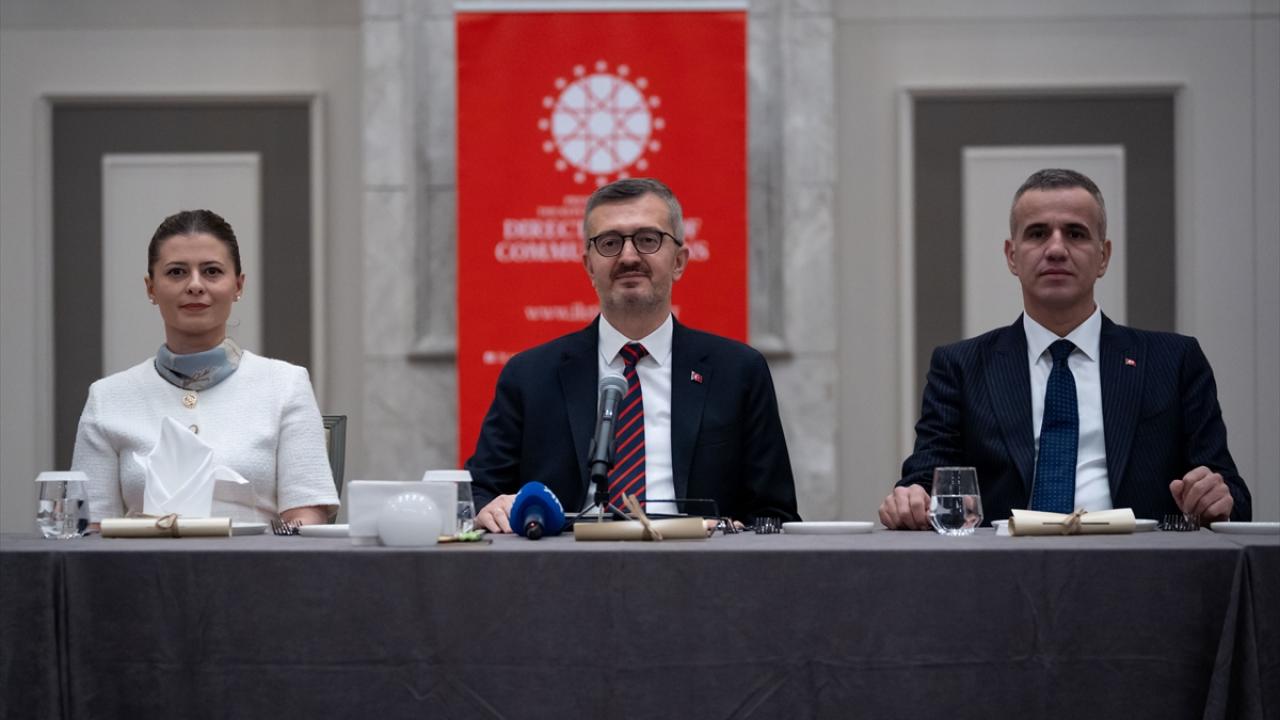
A strategic meeting was held within the framework of the 31st Conference of the Parties (COP31) to the United Nations Framework Convention on Climate Change (UNFCCC), where Turkey is hosting for the first time and the heart of global climate diplomacy is beating. Presidential Communications Director Burhanettin Duran met with a broad delegation consisting of parliamentarians, think tank representatives, academics, and researchers as part of this critical summit, where TRT serves as the host broadcaster. In his comprehensive speech, Duran emphasized that climate change is not merely an environmental issue but an existential crisis shaking global security and economic balances. Stating that Turkey's role in this process is not to act 'as if' but to produce concrete and sustainable solutions, Duran defined Ankara's new vision in climate diplomacy through the triangle of 'dialogue, consensus, and concrete action.'
The meeting focused on the causes and consequences of climate change, as well as how the international system can demonstrate collective resilience against this crisis. Communications Director Duran stated that the climate crisis has become a multi-dimensional issue affecting every aspect of life, from economic development to energy security, and from food supply to migration movements. In this context, it was noted that Turkey's hosting of COP31 is not just an organizational success but also a declaration of leadership in global climate policies. Duran's statements reaffirmed Turkey's determination in the green transformation process and the importance it attaches to international cooperation.
Background of the Development
Turkey's fight against climate change has gained new momentum in the international arena with strategic steps taken in recent years. One of the most important turning points in this process was the ratification of the Paris Agreement by the Turkish Grand National Assembly in 2021, followed by the declaration of the '2053 Net Zero Emission' target. This target has brought about a radical transformation in Turkey's industrial, energy, and transportation policies. As Communications Director Duran pointed out, Turkey has not only made commitments on paper during this process but has also rapidly established the legal infrastructure to support these commitments. The preparation of the Second Nationally Determined Contribution (NDC) and the enactment of the Climate Law have been recorded as the most concrete indicators of this institutional determination.
In the institutional background, Turkey's efforts to integrate climate policies with development strategies are evident. This vision, shaped under the leadership of President Recep Tayyip Erdoğan, treats the issue as a 'sharing of responsibility.' In his speech, Duran reminded the audience of President Erdoğan's words, 'If we focus on a problem, we produce its concrete, sustainable solutions and put forward our roadmap,' underlining that Turkey focuses on action rather than rhetoric. This approach has been the fundamental factor that gained Turkey trust in the eyes of the international community during the COP31 candidacy and hosting process.
Looking at the historical context, Turkey's climate diplomacy has moved beyond being a regional actor and has taken on the identity of a global solution partner. In particular, the effort to balance energy supply security with climate goals makes Turkey a model for similar developing countries. The COP31 process is considered a historic opportunity to explain this model to the entire world and to popularize the understanding of 'total mobilization' in the fight against climate change.
Expert and Industry Insights
The concept of a 'multi-dimensional issue' emphasized by Communications Director Duran is also supported by industry representatives and experts. The direct link between the climate crisis, economic development, and social justice has been placed at the center of new era policies. Experts state that the success of Turkey's climate policy depends on the decisions taken finding a response in economic and social life. At this point, Turkey's strategic priorities are gathered under these five main headings:
- Renewable Energy Transformation: Increasing the share of wind, solar, and geothermal energy in Turkey's energy portfolio reduces foreign dependency while contributing to emission targets.
- Energy Efficiency: The dissemination of energy-saving technologies in industry and housing supports the economic sustainability of the green transformation.
- Sustainable Cities: It is aimed to make urban infrastructure climate-resilient and to reduce the carbon footprint through smart city applications.
- Zero Waste Mobilization: The transition to a circular economy model in waste management creates both environmental and economic value.
- Green Transformation and Climate Law: The legal framework makes the compliance of the private sector and public institutions with climate targets both mandatory and encouraging.
Industry representatives state that Communications Director Duran's emphasis on 'dialogue and consensus' is of critical importance, especially regarding access to finance and technology transfer. The fact that the fight against climate change can only be achieved through the joint efforts of scientists, civil society, the private sector, and think tanks, rather than just through public hands, constitutes the fundamental philosophy of COP31. Technical evaluations indicate that Turkey's inclusive approach could build a bridge between the global South and North.
Economic and Social Implications
The most striking success story in spreading climate policies to the social base is the 'Zero Waste' initiative launched under the leadership of Emine Erdoğan. This project, which was given extensive coverage in Duran's speech, started as a local environmental movement and turned into a world vision accepted by the UN General Assembly. The declaration of March 30 as 'International Zero Waste Day' is seen as a registration of Turkey's soft power and success in environmental diplomacy. This initiative has not only reduced the amount of waste but has also led to an increase in environmental awareness in society and the adoption of the circular economy as a business model.
From an economic perspective, green transformation means new employment areas and investment opportunities for Turkey. Duran emphasized that the success of climate policies will be measured by their equivalent in economic life, stating that development policies and the climate struggle cannot be separated from each other. This situation is of vital importance, especially for exporting companies to comply with international regulations such as the European Green Deal. Access to green financing sources and sustainable investment projects stand out as elements that will contribute to Turkey's macroeconomic stability.
On the social dimension, climate change is a test for ensuring social justice. Protecting disadvantaged groups most affected by the climate crisis and managing migration movements overlap with Turkey's understanding of humanitarian diplomacy. The emphasis on 'social justice' mentioned by Duran reminds us that the fight against climate change is not just a technical process but also a moral and conscientious responsibility.
Future Projections and Outlook
In the coming period, Turkey's main goal in climate diplomacy is to ensure that the decisions taken at COP31 do not remain on paper but turn into concrete action plans. Communications Director Duran stated that Turkey has designed COP31 as a 'results-oriented summit.' In this framework, monitoring mechanisms to be established for the development of cooperation between countries and the implementation of commitments will play a critical role. In this process, Turkey will both advance towards its own 2053 targets and continue its role as a mediator and facilitator on a global scale.
According to the official calendar, it is expected that the obligations brought by the Climate Law will be detailed with sub-regulations and sector-based carbon reduction targets will be clarified. Encouraging the green transformation investments of the private sector and developing domestic renewable energy technologies will be the main agenda items of the next 10 years. The 'long-term struggle' pointed out by Duran guarantees the continuity of the climate vision that Turkey has turned into a state policy.
In conclusion, Turkey's COP31 approach is a call for 'common sense' and 'concrete action' against global crises. At the point of minimizing risks and evaluating opportunities, Turkey is moving towards becoming a playmaker actor at both regional and global levels. Future projections show that Turkey will become a center that not only adapts to the climate crisis but also produces technology and policy for the solution of this crisis.
💬 Yorumlar 0
Henüz yorum yapılmamış. İlk yorumu siz yazın!





