A $15 Billion Energy Leap: Turkey and China Forge Strategic Partnership for Green Transition
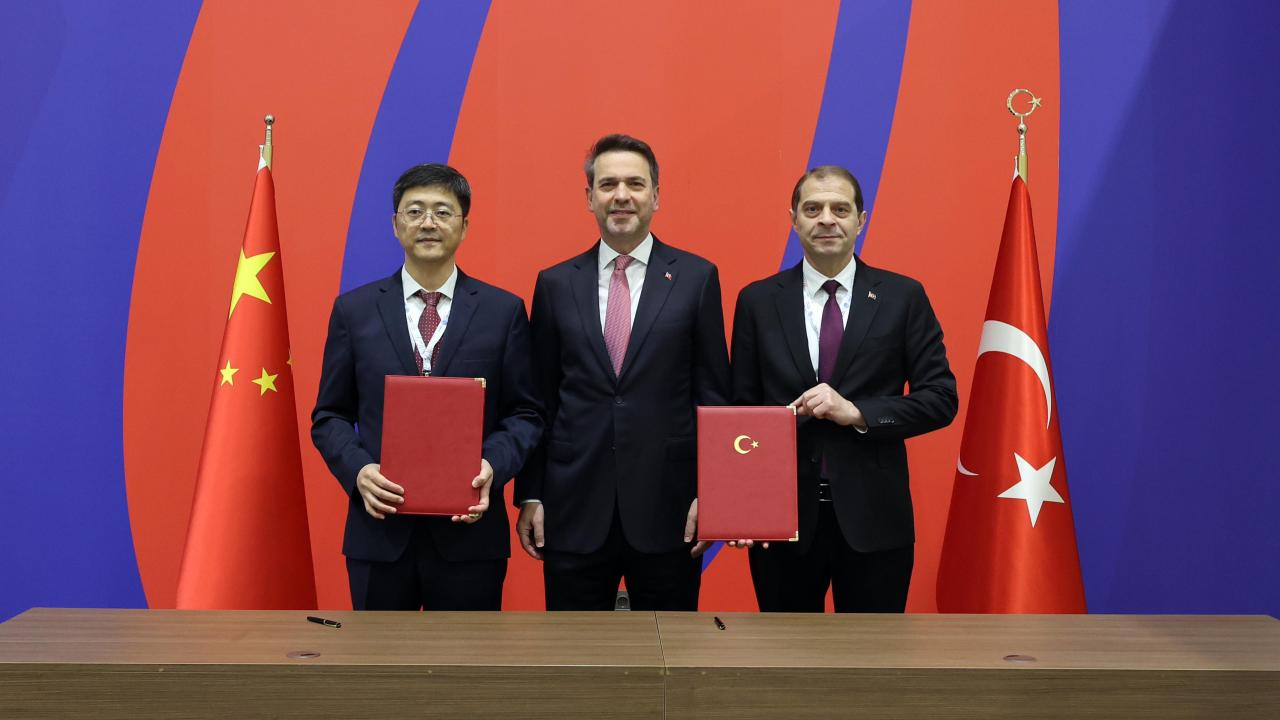
Turkey has reached a strategic turning point in its energy sector. Minister of Energy and Natural Resources Alparslan Bayraktar announced a massive $15 billion investment agreement signed with China. This comprehensive cooperation aims to increase Turkey's renewable energy capacity while modernizing energy storage systems and electricity transmission infrastructure. The total investment, which includes 7,000 megawatts of solar and wind power plants and 4,000 megawatts of transmission line infrastructure, stands as one of the most concrete steps toward Turkey's 'National Energy 2040' vision.
In his statement on social media, Minister Bayraktar emphasized that this agreement is not merely a capacity increase but also a lever for technology transfer and the development of local industry. Specifically, the requirement for wind turbine equipment to be manufactured within Turkey is considered a critical move that will enhance the global competitiveness of the domestic industry.
Background of the Development
In recent years, Turkey has been making massive investments in renewable energy sources to ensure energy supply security and reduce external dependency. The 2040 vision is based on diversifying the country's energy portfolio to achieve carbon neutrality goals. In this process, China's global leadership in renewable energy technologies aligns perfectly with the technological infrastructure Turkey requires.
Historically, Turkey has always valued international partnerships to modernize its energy infrastructure. However, this $15 billion agreement stands out as one of the largest foreign direct investment packages in recent times due to its scale. While past projects generally proceeded on a component basis, this new cooperation offers an integrated model covering production, storage, and transmission.
The cost advantage and production capacity of China in solar and wind energy technologies, when combined with Turkey's domestic industry goals, create a potential that will shift energy balances in the region. This agreement is recorded in history not just as a financing package, but as a strategic step Turkey has taken on the path to energy independence.
Expert and Industry Insights
Energy sector representatives and economists predict that this agreement could accelerate Turkey's green transition process by at least 5-10 years. According to experts, the local manufacturing requirement, in particular, supports Turkey's goal of becoming an exporter of energy technologies.
- Domestic wind turbine production will directly contribute positively to Turkey's current account deficit.
- Energy storage systems will increase grid stability, minimizing the intermittent nature of renewable energy.
- The 4,000-megawatt transmission infrastructure will ensure more efficient transport of generated energy to industrial centers.
- Technology transfer will accelerate the alignment of Turkish engineering capacity with global standards.
- The $15 billion investment will refresh economic confidence through foreign direct capital inflow.
Industry experts state that an investment of this scale strengthens the vision of making Turkey an energy hub for the region. Specifically, the local equipment to be used in the installation of solar and wind power plants will strengthen Turkey's position in the supply chain.
Economic and Social Implications
The economic impacts of this massive investment will not be limited to the energy sector alone. It is expected to create thousands of new employment opportunities in various auxiliary sectors such as construction, logistics, engineering, and manufacturing. The development of local industry will reduce Turkey's energy technology imports, reflecting positively on the foreign trade balance.
From a social perspective, the transition to green energy will increase public awareness in Turkey's fight against climate change. An industrial structure based on clean energy will play a critical role in achieving sustainable development goals. For citizens, a more stable and cost-effective energy supply stands out as a long-term gain.
Market players express that this agreement increases Turkey's investability and creates a signal of confidence for other international investors. Turkey's geographical location offers an ideal foundation for the successful implementation of such large-scale projects.
Future Projections and Outlook
In the coming period, the technical details of the agreement are expected to be finalized, and projects are expected to move into field implementation. Under the coordination of the Ministry of Energy, it is anticipated that land allocation and incentive processes for establishing domestic production facilities will accelerate. During this process, environmental impact assessment reports and technical feasibility studies will be priority agenda items.
Regarding risk management, fluctuations in the global supply chain will need to be closely monitored. However, Turkey's strong industrial infrastructure and the strategic partnership established with China allow these risks to be minimized. On the road to the 2040 vision, this $15 billion signature symbolizes Turkey's determination not just to be an energy consumer, but also an energy technology producer.
In conclusion, this step taken in line with Turkey's energy supply security and green transition goals is a turning point from both an economic and strategic perspective. With the realization of these projects in the coming years, the share of renewable sources in Turkey's energy portfolio will reach record levels.
💬 Yorumlar 0
Henüz yorum yapılmamış. İlk yorumu siz yazın!





