Minister Şimşek: Green Transformation is at the Heart of Our Economic Program
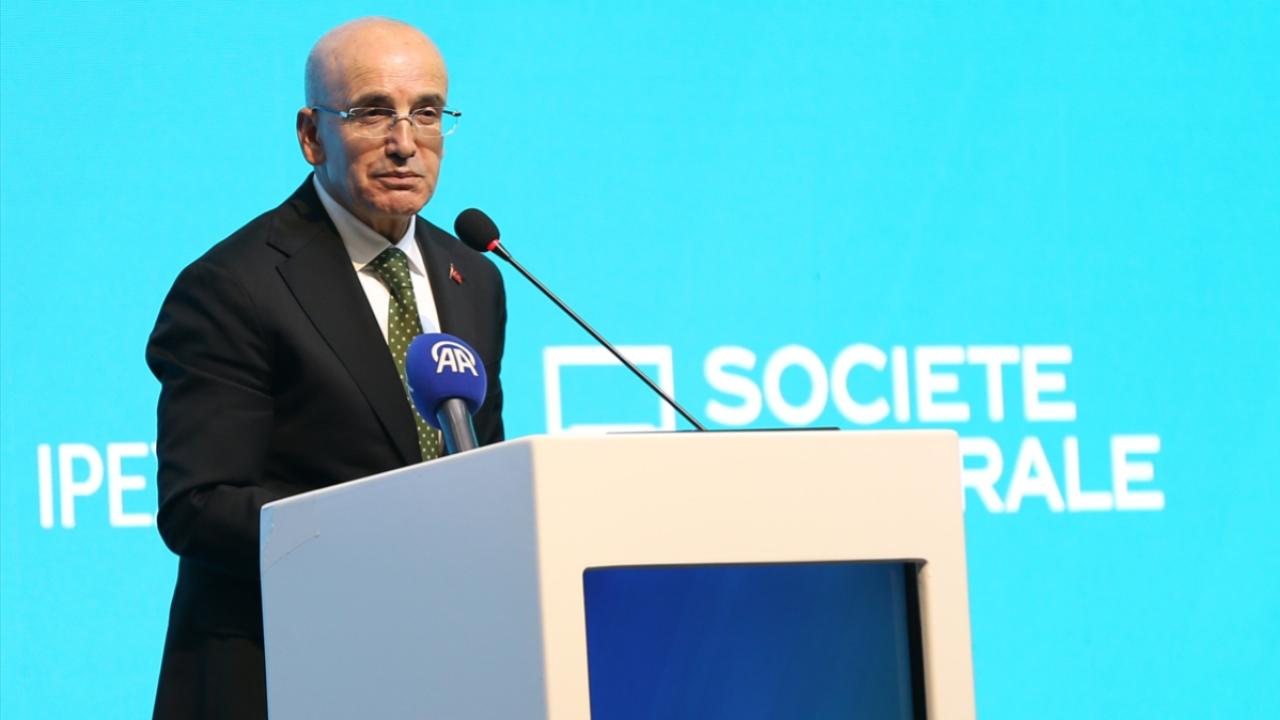
Treasury and Finance Minister Mehmet Şimşek delivered critical remarks at the Export Credit Agency Financing Summit, held on the sidelines of the 31st United Nations Climate Change Conference (COP31) hosted by Turkey. Speaking at the summit, which was organized in cooperation with Türk Eximbank and the UK's export credit agency, UK Export Finance (UKEF), Minister Şimşek highlighted that at a time when the global economy is struggling with geopolitical tensions and trade fragmentation, green transformation is not just an environmental preference but an economic imperative. Şimşek underscored that the world now needs concrete, financed, and job-creating projects rather than empty commitments.
In his speech, Minister Şimşek specifically drew attention to the European Union's Carbon Border Adjustment Mechanism (CBAM), reminding that approximately 55% of Turkey's exports go to Europe, with 43% going directly to EU countries. Emphasizing that this situation turns green transformation from a preference into a matter of survival for Turkey to maintain its competitiveness in foreign trade, Şimşek stated that it is impossible for industrial enterprises that cannot reduce their carbon emissions to remain competitive in international markets.
Background of the Development
The global fight against climate change has entered a much more concrete phase since the Paris Agreement. COP31 is recognized as one of the most critical milestones in this process. In recent years, Turkey has determined a comprehensive strategy to reach its 2053 net-zero emission target with its 'Green Development Revolution' vision. This strategy is not only an environmental goal but also an economic transformation program that includes the modernization of industrial production and energy efficiency.
Turkey's energy imports constitute the largest item in its foreign trade deficit. As Minister Şimşek noted, the approximately one trillion dollars paid for oil and natural gas over the last 20 years has created significant pressure on the country's current account balance. Current energy policies and dependence on fossil fuels indicate that if necessary structural reforms are not implemented, a similar financial burden will arise over the next 20 years.
In this context, financing summits of institutions like Türk Eximbank and UKEF play a vital role in mobilizing the capital required to realize green projects. The green transformation of export-oriented industry is considered one of the most strategic steps taken to solidify Turkey's place in global value chains and increase its energy security.
Expert and Industry Insights
Economic experts and industry representatives support Minister Şimşek's thesis on the 'competitiveness of green transformation.' Especially the carbon taxes implemented by Europe within the framework of the 'Green Deal' are seen as both a risk and an opportunity for Turkish industrialists. According to experts, the following steps are critical for the successful management of this transformation:
- Encouraging energy efficiency investments in industry and increasing state support.
- Disseminating carbon footprint measurement capacity at the SME level.
- Rapidly increasing the share of renewable energy sources in the total energy supply.
- Diversifying green financing instruments (green bonds, sustainability-linked loans).
- Integrating circular economy models into production processes.
Industry representatives state that green transformation should not be seen merely as a cost item, but as an investment that will strengthen macroeconomic stability by reducing energy costs in the long run. It is stated that export companies, in particular, must complete this transformation as soon as possible to overcome the barriers applied against 'carbon-intensive' products in European markets.
Economic and Social Implications
The social and economic impacts of green transformation are quite broad. First, reducing the energy import bill can alleviate the pressure on the Turkish Lira by reducing Turkey's current account deficit. This also provides indirect support for the success of the anti-inflation program. Furthermore, investments in green energy and technology will trigger a qualified transformation in the labor market by creating high value-added employment areas.
From a social perspective, a cleaner environment and more efficient energy use will directly affect the quality of life of the public. However, retraining the workforce employed in energy-intensive sectors and establishing 'just transition' mechanisms during this transition process are of great importance for maintaining social peace. The government's coordination of this process with the modernization of the industry will minimize social costs.
Future Projections and Outlook
In the coming period, Turkey is expected to increase its access to green financing sources in line with the decisions taken at COP31. It is anticipated that the Ministry of Treasury and Finance will cooperate with international financial institutions to create more affordable and long-term loan opportunities for green projects. In this process, the private sector is also expected to fulfill its responsibility by 'greening' its production processes.
Risks include fluctuations in global financial markets and the costs of technology transfer. However, Turkey's strong trade ties with Europe will continue to be a source of motivation for accelerating this transformation. The next 5-10 years will be a period in which Turkey completely transforms its industrial infrastructure and solidifies its place in the global green economy.
In conclusion, as Minister Şimşek stated, green transformation is no longer a choice but the key to economic survival and growth. By managing this transformation correctly, Turkey can both gain energy independence and move its position in global competition to the next level.
💬 Yorumlar 0
Henüz yorum yapılmamış. İlk yorumu siz yazın!





