Minister Şimşek on Industrial Production: A Message of Growth and Transformation
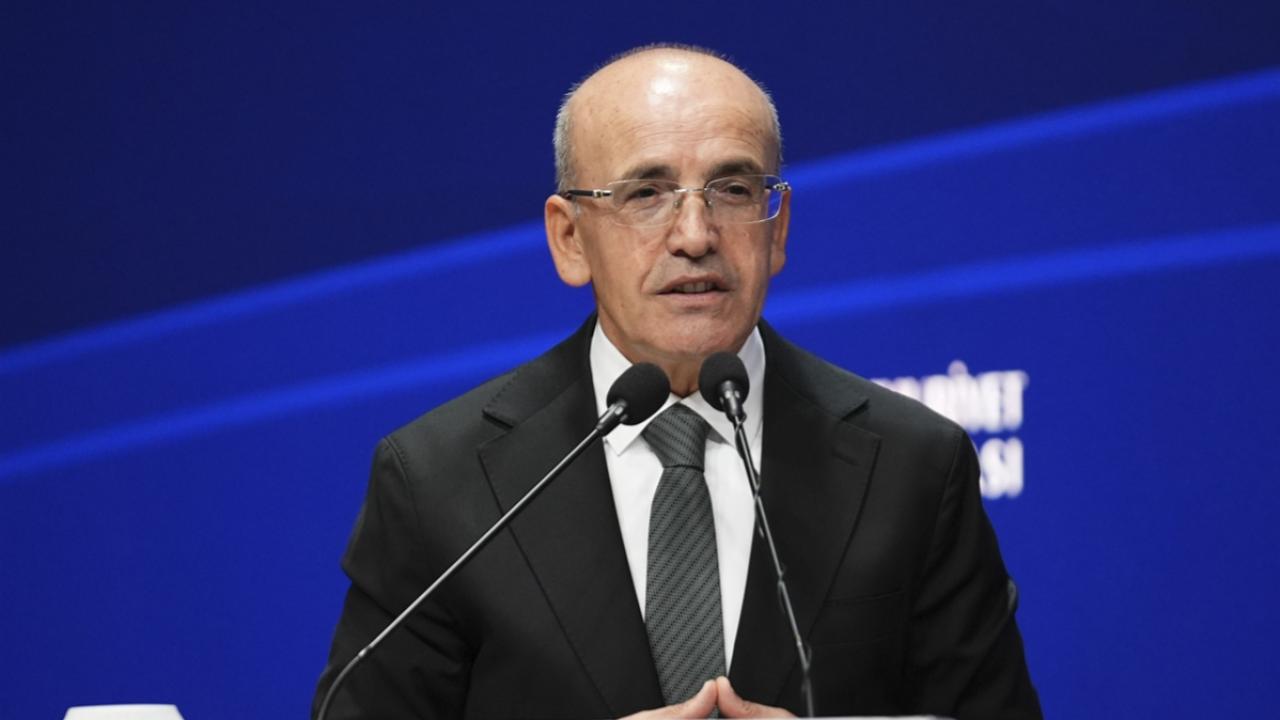
Treasury and Finance Minister Mehmet Şimşek has evaluated the industrial production index data for September, as released by the Turkish Statistical Institute (TurkStat). In a statement shared via his social media account, Minister Şimşek highlighted the resilient stance of Turkish industry throughout 2026, a year marked by global economic uncertainties and weak demand from major trading partners. Noting that industrial production increased by 2.1 percent on a monthly basis and 2.6 percent annually in September, Şimşek stated that these figures confirm the continuation of a moderate growth trend in the economy.
Pointing out that the 7.6 percent annual increase in high-tech production during the January-September period reflects the results of the government's value-added and productivity-oriented economic policies, Minister Şimşek emphasized the success of these strategic steps. This development is viewed as a tangible achievement in Turkey's efforts to transform its production structure and establish a more sophisticated industrial infrastructure.
Background of the Development
Throughout 2026, the Turkish economy has grappled with a conjuncture characterized by slowing global trade and tightened financial conditions. The contraction in demand from key export markets, particularly the European Union, has been one of the most significant external factors directly impacting industrial production. However, Turkey's economic program, designed around balancing domestic demand and diversifying foreign trade, has sought to create a shield against these external shocks.
Historically, industrial production data is considered one of the most important leading indicators of Turkey's growth performance. The increase in high-tech production observed in the first nine months of 2026, in particular, indicates that the industry is undergoing not just a quantitative but a qualitative transformation. This process represents an effort to climb higher in global value chains, rather than merely increasing output.
The government's structural transformation steps encompass the modernization of industrial capacity and digitalization processes. As Minister Şimşek emphasized, this process is managed with a long-term goal of increasing productivity rather than just short-term recovery. This resilience in industrial production serves as a confirmation of the 'production-oriented growth' model, which is a cornerstone of Turkey's macroeconomic stability program.
Expert and Industry Insights
Economists and industry representatives state that the released data shows Turkey has maintained 'production discipline' despite challenging global conditions. According to experts, the 7.6 percent annual increase in high-tech production, in particular, signals that a critical threshold has been crossed in the transition to value-added products.
- High-tech production contributes to closing the foreign trade deficit by increasing Turkey's export unit value.
- The 2.1 percent monthly increase in industrial production shows that vitality and production motivation in the domestic market remain intact.
- The improvement in global financial conditions may further trigger production by reducing financing costs for industrialists.
- Structural reforms are increasing competitiveness by accelerating the energy efficiency and digital transformation of industrial facilities.
- The recovery in demand from trading partners will act as a lever that will positively reflect on production data in the final quarter of 2026.
Industry representatives emphasize that Minister Şimşek's message that 'support will continue' is vital to keep the investment appetite of industrialists alive. In particular, it is stated that R&D and innovation incentives ensure the sustainability of this increase in high-tech production.
Economic and Social Implications
This moderate growth in industrial production also creates direct positive effects on the labor market. The maintenance of industrial production capacity ensures the continuation of stability in the labor market. It should not be overlooked that the increase in production means job security and income stability for a large segment of the population working in the manufacturing sector.
From an economic perspective, industrial production data provides supply-side support in the fight against inflation. Increased production supports the continuity of the supply of goods and services, acting as a helpful factor in achieving price stability targets. Furthermore, it eases the burden on the current account deficit by exerting a positive pressure on the foreign trade balance.
Socially, the technological transformation of the industry increases the demand for qualified labor. This situation once again brings to the agenda the necessity for the education system and vocational training to be integrated with the industry. The structural transformation emphasized by Minister Şimşek represents a process that transforms not only factories but also human capital.
Future Projections and Outlook
In the coming period, with global financial conditions becoming more predictable, Turkey is expected to gain stronger momentum in industrial production. The expectation of a 'strengthening outlook in production' pointed out by Minister Şimşek indicates that capacity utilization rates in the industry will be pushed further upward, especially in a scenario where external demand increases.
The government's agenda includes accelerating steps for digitalization and green transformation in the industry. These steps will facilitate Turkey's compliance with global standards, such as the European Green Deal, and maintain its competitiveness in export markets. It is expected that the investment incentive system will focus more on high value-added areas.
In conclusion, it is projected that Turkey's production-oriented growth strategy will continue to bear fruit for the remainder of 2026 and as it enters 2027. Although risks such as global geopolitical tensions and energy costs remain, the resilience shown by the industry proves that the Turkish economy has the capacity to overcome these challenges.
💬 Yorumlar 0
Henüz yorum yapılmamış. İlk yorumu siz yazın!





