Turkey-China Strategic Partnership: Green Development and Economic Future
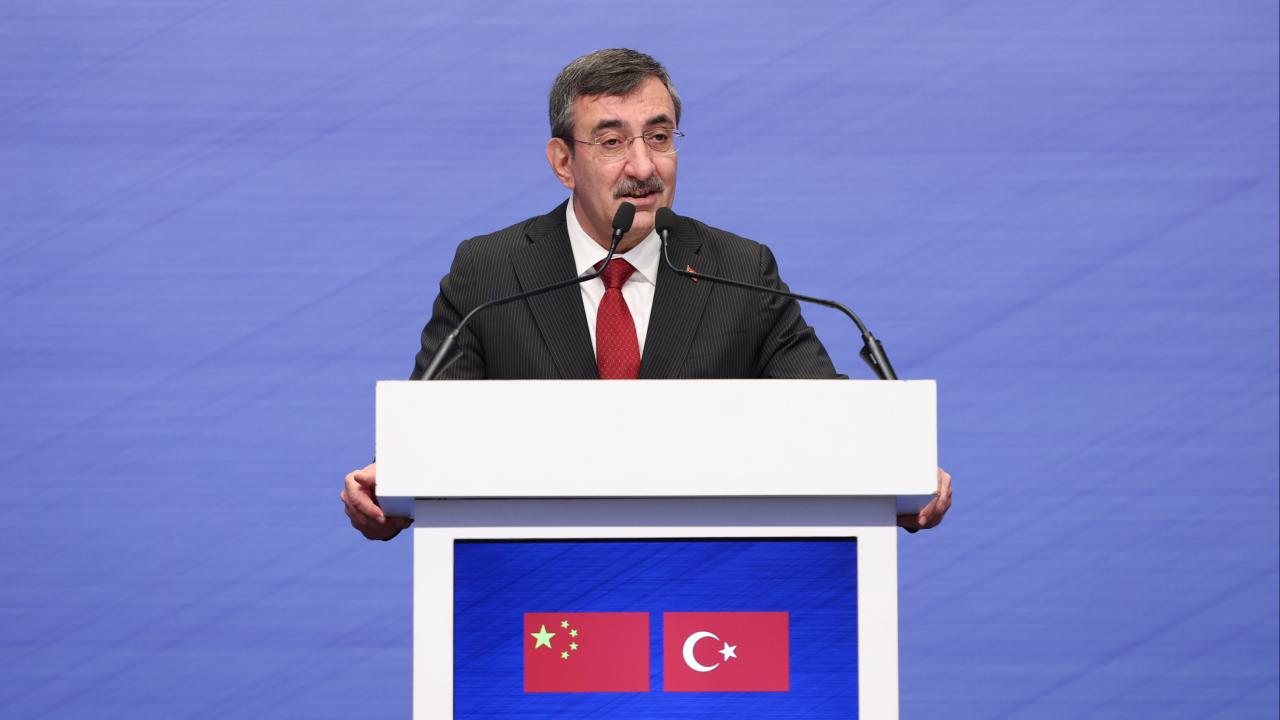
Vice President Cevdet Yılmaz attended the "Turkey-China Green Development Business Forum" in Istanbul, organized in cooperation with the Ministry of Trade, the Foreign Economic Relations Board (DEİK), and the China Council for the Promotion of International Trade, declaring that economic relations between the two countries have entered a new era. Yılmaz stated that the high-level political dialogue, conducted during the 55th anniversary of diplomatic relations between Turkey and China, has paved the way for placing economic relations on a more balanced, sustainable, and production-oriented foundation.
Expressing that the strategic framework set by President Recep Tayyip Erdoğan and Chinese President Xi Jinping serves as a compass for cooperation between the two nations, Yılmaz delivered strong messages of commitment to increasing mutual investments and establishing new partnerships. This forum stood out as a critical platform reflecting the shared vision of two major economies at a time when global supply chains are being reshaped, rather than just being a commercial meeting.
Background of the Development
Relations between Turkey and China have gained momentum since they were elevated to the level of "strategic cooperation" in 2010. Historically, the interaction network between the two countries has spanned a wide spectrum, from infrastructure projects to technology transfer. The 55-year diplomatic history has evolved into a more sophisticated structure based on mutual respect and common interests today.
Discussions on energy security and supply chain disruptions in the global economy have made Turkey's geopolitical position and China's production capacity complementary elements. The integration of green transformation into the core of industrial policies has created a common denominator in the development plans of both countries. Turkey's 2053 net-zero emission targets, when combined with China's technological capacity, are opening the doors to a new economic model for the region.
Political dialogue mechanisms have transformed into a structure that supports not only bilateral trade but also regional stability. As emphasized by Vice President Yılmaz, these relations are now evolving into a partnership focused on technology and sustainability rather than just trade in goods.
Expert and Industry Insights
Economic experts and industry representatives state that this cooperation between Turkey and China holds great opportunities, especially in the fields of green energy technologies and digital transformation. According to experts, the combination of Turkey's proximity to the European market and China's production power provides a strategic advantage in global competition.
Sectoral expectations and analyses are gathered under the following headings:
- Direct foreign investments in green energy infrastructure are expected to increase.
- The establishment of joint R&D centers in digital transformation and smart city technologies is targeted.
- Technology transfer in renewable energy projects that will reduce dependence on energy imports will accelerate.
- Logistics and supply chain management will become more efficient with the "Middle Corridor" initiative.
- The alignment process in climate diplomacy and sustainable trade standards will strengthen export capacity.
Industry representatives emphasize that this cooperation should not be limited to large-scale industrial projects but should also create an ecosystem at the SME level. It is anticipated that collaborations between technology-oriented startups and Chinese partners will directly contribute to Turkey's value-added export targets.
Economic and Social Implications
Turkey's green transformation policies play a critical role in maintaining macroeconomic stability. As an energy-importing country, Turkey views green transformation not only as an environmental necessity but also as a tool for economic efficiency. This transformation increases the competitiveness of the industry while placing Turkey in a stronger position in the future of international trade.
From a social perspective, green development projects have the potential to create new employment areas. Directing qualified human resources to these new technological fields could lead to structural improvements in Turkey's labor market. Furthermore, environmental sustainability goals encourage urban transformation and clean energy applications that will improve the quality of life for society.
Market stakeholders state that this strategic partnership with China increases Turkey's credibility in the eyes of global investors. Improving the investment environment and strengthening the legal framework are among the concrete outcomes of such forums.
Future Projections and Outlook
In the coming period, it is expected that relations between Turkey and China will gain a more institutional structure. Especially on the road to COP31, Turkey's leadership role in climate diplomacy will be further reinforced by joint projects with China. Establishing a more sustainable structure for the trade balance between the two countries is among the priority agenda items.
In the official process, it is planned to increase bilateral agreements in the fields of energy and technology and to closely monitor the implementation phases of these agreements. In terms of risk management, developing a joint resilience mechanism against fluctuations in global markets is among the long-term goals.
In conclusion, Turkey's strong industrial infrastructure and China's technological accumulation could make the two countries each other's most important strategic partners in the global green development race over the next decade. This process will bring about not only economic but also geopolitical deepening.
💬 Yorumlar 0
Henüz yorum yapılmamış. İlk yorumu siz yazın!





