100 years of safety in automotive: It started with braking, continues with autonomous driving
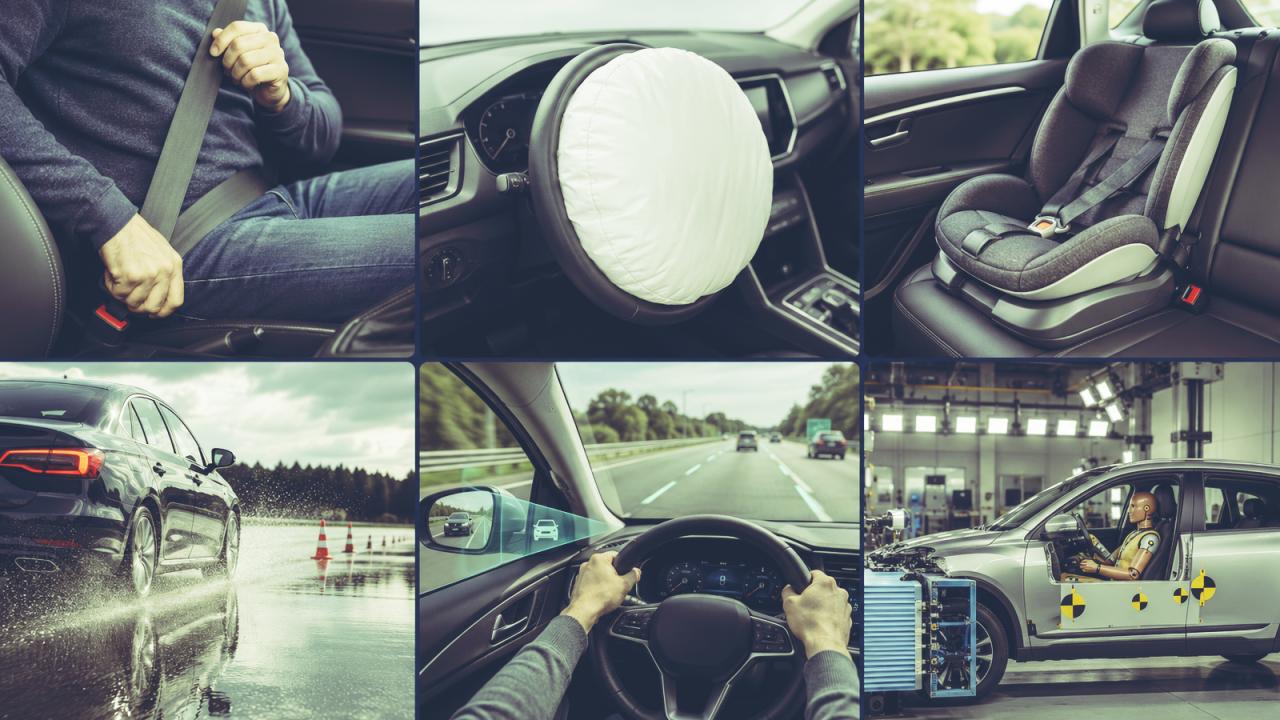
Since vehicles began to enter human life, driver, passenger and pedestrian safety continues to be one of the most important issues. 'Automotive safety systems' studies, which started in the 1930s, have made significant progress in 100 years.
Since road and lane regulations were not made in the past, the dangers posed by vehicles caused accidents, complaints and requests for bans.
When Carl Benz patented what was considered the first automobile in 1886 and Henry Ford started mass production of the 'folk type' T model in 1908, safety measures began to develop rapidly. The only safety measure in the first cars was the brake. Although it may seem hard to believe today, the first vehicles did not have headlights or signals. Innovations such as power steering came in 1951 and cruise control in 1958. Interestingly, although the first seat belt was used in 1903, today's common three-point safety belt was invented in 1959.
In 1971, anti-lock braking system (ABS) was introduced and brakes became safer. In 2000, satellite navigation, which was previously monopolized by the US military, began to be used in civilian vehicles. In the 2010s, cars with cruise control and lane centering features became frequently seen on the roads. Now the car may not even allow you to change lanes if there is another vehicle nearby.
The first security measures were mechanical systems. Over time, hydraulic brake systems were used. Friction material technology in brake pads has improved. "If the accident cannot be prevented, as a result of the logic of protecting the driver and passengers, the vehicle bodies are surrounded by steel frames, while the interior is equipped with airbags not only for the driver but also for the passengers. In addition, bodywork and equipment changes have been made to ensure that the vehicle absorbs the collision and reflects it to the occupants in the least way. New technologies have been added to production to prevent the vehicles from drifting around corners and not being affected by the wind.
Crash tests, which began in the 1950s, became the industry standard over time. In 1966, the National Transportation Security was established in the United States. In Europe, the European New Car Assessment Program (Euro-NCP) came into effect in 1997. Thus, security tests began to be carried out by independent organizations, not by manufacturers.
Systems such as lane tracking assistant, adaptive cruise control, automatic emergency braking, blind spot warning, and traffic sign recognition began to appear in vehicles in the 2000s. Thus, the safety in vehicles was further increased and another step was taken to prevent accidents. Vehicles produced today can distinguish pedestrians, cyclists and intersections before the human eye and take precautions.
Since the 2010s, vehicles that think and take precautions instead of drivers began to be seen. Artificial intelligence-supported systems that monitor the driver's facial expression, wake him up if he is sleeping, and warn him to 'rest' if he has been driving for a long time have come into play. Vehicles have started to recognize the driver and adjust the configuration accordingly. Vehicles that can be accessed and controlled remotely have enabled the driver to no longer be the 'sole decision maker' on the vehicle. If the vehicle thinks the driver is unconscious or asleep, it can safely pull itself to the right.
Source: TRT Haber Yaşam RSS (Open Press / Translated Full Text)
💬 Yorumlar 0
Henüz yorum yapılmamış. İlk yorumu siz yazın!
